


Black Excellence | The Light of Stories | Les Studio MP - MHN LONGUEUIL 2026


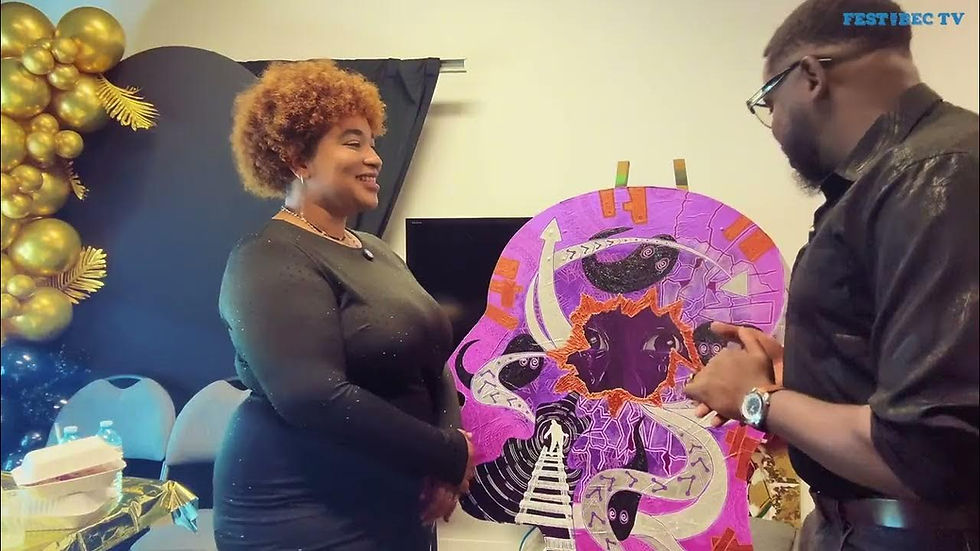
As part of a special program dedicated to Black History Month, two committed entrepreneurs, Justin and Camia Mbaya, shared a testimony that was both personal and inspiring, blending life journeys, identity, and community involvement.
Owners of a studio and active in their community, the Mbaya couple define themselves above all by their versatility: “We are many things,” they say with a smile, before specifying their roles as entrepreneurs, parents, and committed figures working with youth.
For Justin Mbaya, Black history cannot be limited to a simple commemoration of the past. It must also reflect current dynamics: “Black history is about talking about the past […] but also emphasizing what is happening right now. There are Black people who have an impact […] in all fields.”
While he mentions influential figures such as Martin Luther King, it is mainly to highlight the legacy of engagement they left behind. “He went to meet young people […] he had the means, but he chose to help his generation.” An approach that directly inspires his own commitment today, particularly in schools where he speaks to encourage young people to believe in their abilities.
Camia Mbaya’s testimony adds an intimate dimension to the discussion. Having grown up in a white family, she speaks about an identity shaped by doubt and a lack of reference points: “My identity as a Black woman was greatly challenged […] it affected my confidence and how I saw myself.”
She recalls her childhood, marked by a feeling of difference: “I used to cry because I didn’t have the same hair as my mother.” It was only in adulthood, through new connections and role models who looked like her, that she fully realized her worth: “I understood that I had something unique, something special.”
For her, Black History Month plays an essential role in representation: “Young girls can identify with someone else doing great things.”
Driven by a desire to pass on knowledge, Justin Mbaya regularly works with young people facing realities similar to his own. He shares his journey openly: academic struggles, dropping out, unstable jobs, followed by a return to education and gradual rebuilding.
“I told myself it was useless […] in the end, I was going in circles.” This realization marked a turning point: “I went back to train […] today we are in our studios.”
His message to young people is clear: “You don’t know […] keep going. You never know.” He emphasizes the need to persevere despite obstacles and not to limit oneself to a single path.
Beyond individual journeys, the Mbayas advocate for greater solidarity within the Afro-descendant community. Camia calls for collective support: “Everyone should support each other […] so we can feel that connection.”
Justin adds by highlighting the challenges of individualism: “Why not bring all these projects together […] and show that we are strong, that we can have an impact.”
As a conclusion, both guests share advice rooted in pragmatism. Camia stresses the importance of taking action despite limited resources: “You don’t need everything before you start […] start with what you have.”
Justin, for his part, delivers a powerful statement that summarizes his mindset: “Your condition is not your conclusion.” He warns against decisions made in difficult moments: “We make permanent decisions based on temporary feelings.”
For him, environment and surroundings play a decisive role: “We surround ourselves with good people […] we encourage each other to move in the same direction.”
Through their words, Justin and Camia Mbaya illustrate a reality that is often underrepresented: that of a resilient, engaged Afro-descendant youth focused on the future, transforming challenges into drivers of impact.


Comments