


The AfroMuseum Returns Soon | Looking Back on an Exceptional Cultural Journey | LIVING Heritage


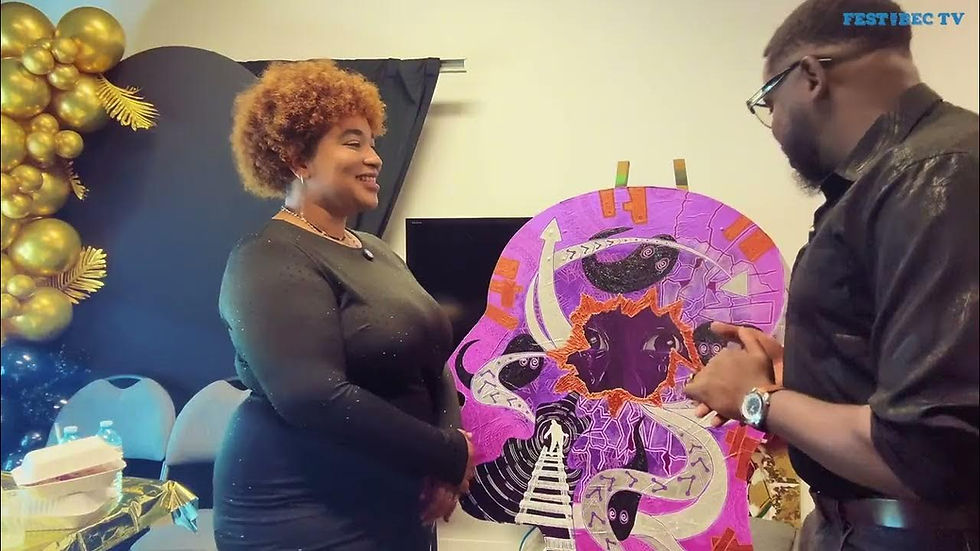
In an atmosphere both moving and resolutely forward-looking, an evening tribute was organized in honor of the AfroMuseum, that emblematic Montreal venue that is temporarily closing its doors after more than eleven years of existence. The event, skillfully orchestrated by Marianna Bald, brought together artists, cultural activists, institutional partners, and members of the Afro-descendant community to celebrate not an end, but a “necessary pause” — or even a transformation.
Founded by Guy Mushagalusa, the AfroMuseum has established itself as a rare space dedicated to African and Afro-Caribbean visual arts, filling a glaring gap in Quebec’s cultural landscape. “For 11 years, this place has been more than a gallery: it was a home, a place of resilience, meeting, and creation,” said Mushagalusa, visibly moved by the gathered crowd. He explained that the decision to suspend activities stemmed from unsustainable real estate pressures exerted by the property owner, Olymbec, despite sound financial management and no debt.
Rather than being discouraged, the visionary behind the project chose peace — a strategic peace, meant to allow for reinvention. “The AfroMuseum is not a place; it is a spirit. And that spirit, no one can take from us,” he declared, evoking the metaphor of the caterpillar becoming a butterfly. A vision shared by many present, including Gérard Le Chen, co-founder of the Vues d’Afrique festival, who reminded everyone that the festival celebrated its 40th anniversary this year, itself embodying cultural perseverance in the face of initial institutional indifference.
The evening highlighted the intercultural and intergenerational role of the AfroMuseum. Moving testimonies followed one after another: Haitian-Quebec artist Rebecca Jean spoke about collaborations that emerged on stage between creators of diverse origins; Abdouahï, a young up-and-coming member, shared how this place helped him forge his identity; and municipal representative Sadia Groguhet praised “a heart on legs” that succeeded in uniting people beyond borders.
But beyond the tributes, a powerful call to action resonated. Christian Basson, from TD Bank, issued a challenge to the community: “It’s no longer enough to be in demand. We must take charge.” Karini Somba, director of the organization Rise and Pray, emphasized the need to move “from talk to action” by mobilizing tangible financial resources. Initiatives such as a collective cultural real estate project inspired by the Harlem Renaissance were mentioned as possible ways to ensure the AfroMuseum’s long-term survival.
Freddy Bamba, Guy’s right-hand man, and Bénédicte Kaninda, a member of the board of directors, concluded with a message of unity: “This is not the business of one man, but of an entire family.” And while Guy takes a well-deserved rest — “we’re taking him to the airport tomorrow,” said Bénédicte tenderly — the community itself has no plans to slow down.
In a respectful silence punctuated by a symbolic minute of reflection, the AfroMuseum’s artworks seemed to whisper to one another: this is not an end, but the beginning of a new chapter. A chapter that all, together, are committed to writing — stronger, more inclusive, and more sustainable.
“Where there is love, it is never night,” says an African proverb. That evening, the light was indeed present — carried by thousands of voices, outstretched hands, and souls determined not to let the flame die out.


Comments